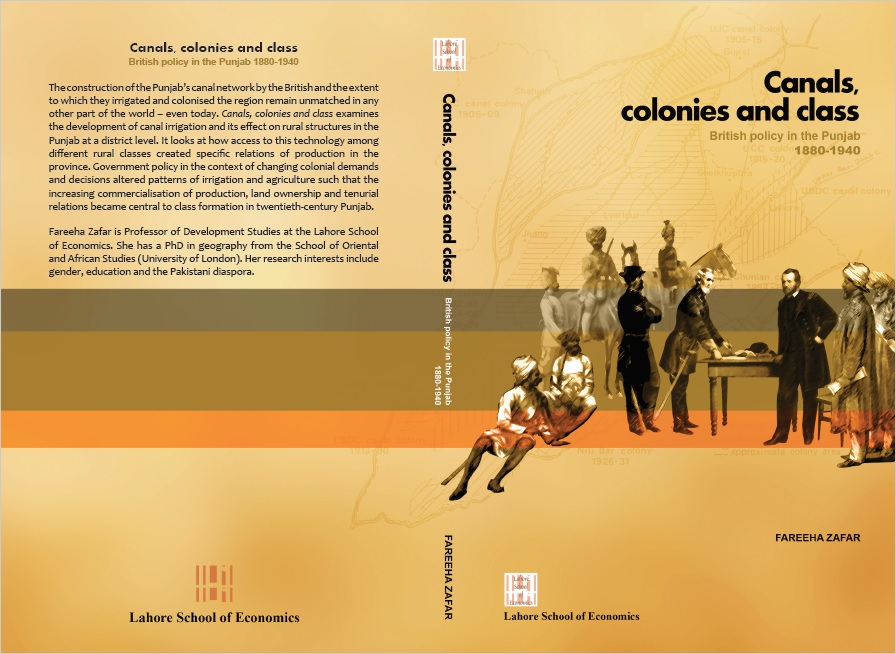
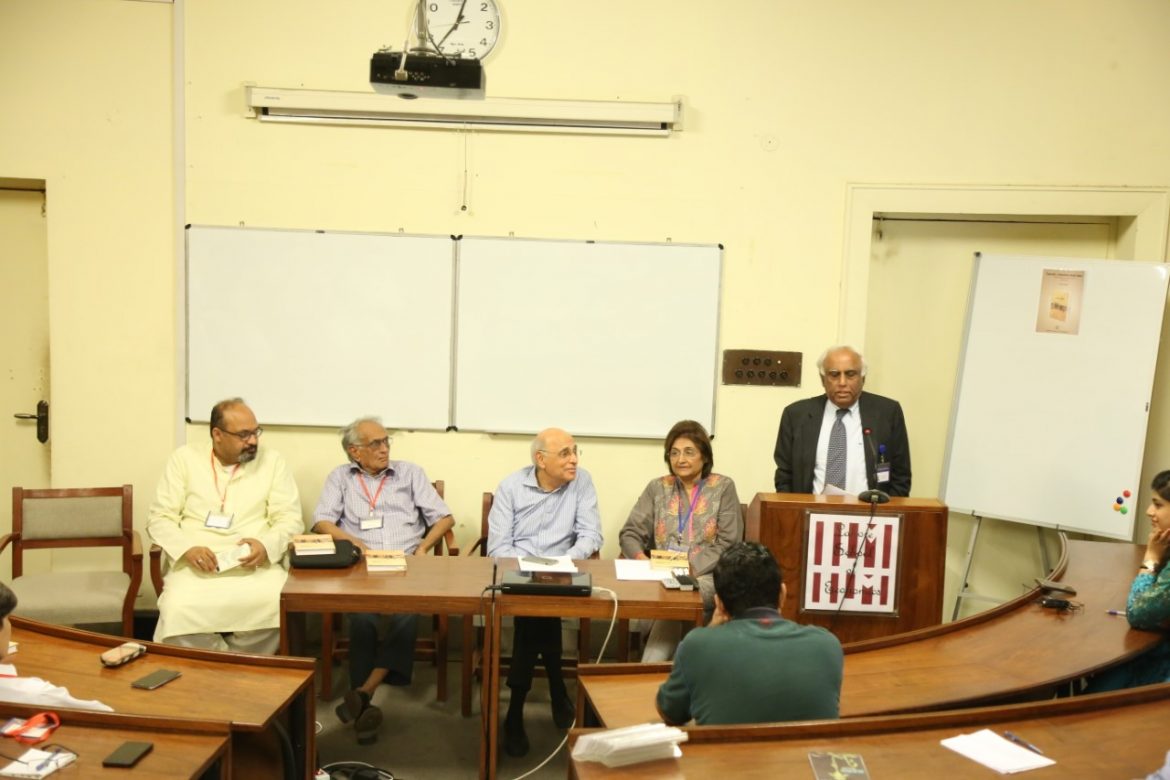
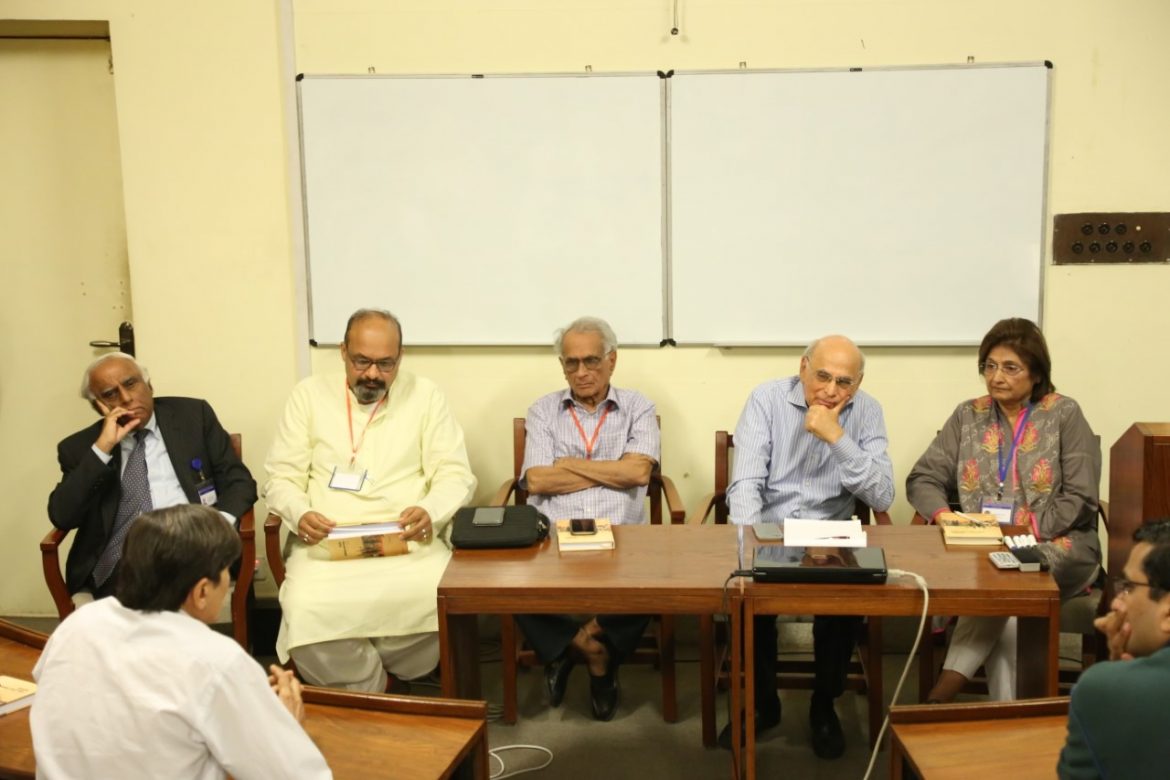
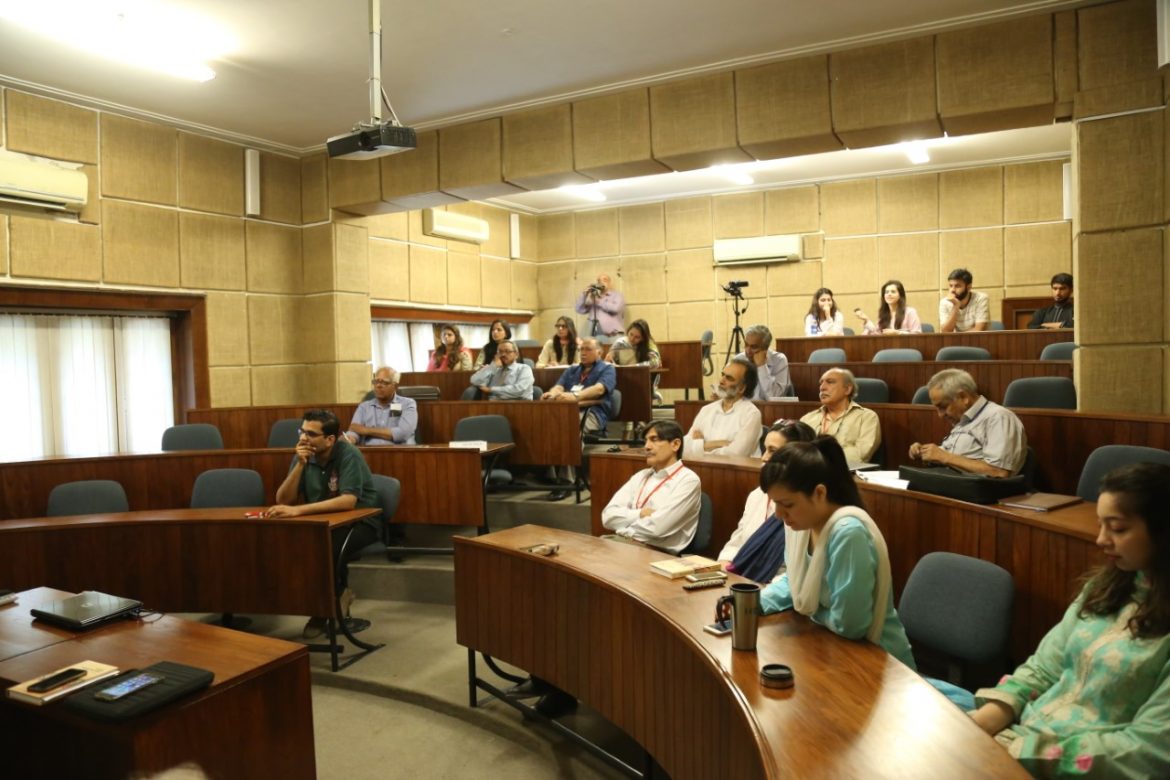
Book Launch ceremony of Dr Fareeha Zafar, Professor at the Graduate Institute of Development Studies (GIDs) was held at LSE, city campus on 24th May, 2017. The main speakers at the event were Professor Dr Naved Hamid, Professor Pervaiz Vandal, Dr Faisal Bari and Dr Rashid Amjad.
The book Canals, colonies and class: British policy in the Punjab 1880-1940 highlighted the construction of the Punjab’s canal network by the British and the extent to which they irrigated and colonized the region remain unmatched in any other part of the world – even today. Canals, colonies and class examines the development of canal irrigation and its effect on rural structures in the Punjab at a district level. It looks at how access to this technology among different rural classes created specific relations of production in the province. Government policy in the context of changing colonial demands and decisions altered patterns of irrigation and agriculture such that the increasing commercialization of production, land ownership and tenurial relations became central to class formation in twentieth-century Punjab.