Published in The Express Tribune on September 24, 2023
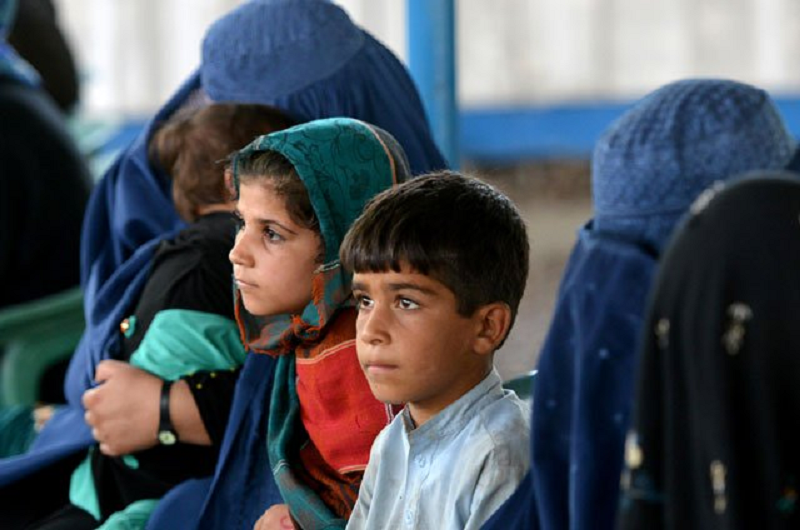
ISLAMABAD: The population of Afghan nationals residing in Pakistan has surged to 3.7 million as of June this year, with a mere 1.3 million of them officially registered with the authorities, as reported by the United Nations High Commissioner for Refugees (UNHCR).
The data reveals that approximately 775,000 unregistered Afghans are currently residing in the country.
A significant 68.8% of Afghan citizens in Pakistan have settled in urban or semi-urban areas, while the remaining 31.2% are distributed across 54 different regions, including villages.
Breaking down the figures, it’s noted that as of June 2023, Khyber-Pakhtunkhwa hosts 52.6% (735,800) of Pakistan’s undocumented Afghan population, Balochistan accounts for 24.1% (321,677), Punjab has 14.3% (191,053), Sindh houses 5.5% (73,789), Islamabad accommodates 3.1% (41,520), and Azad Jammu and Kashmir hosts 0.3% (4,352).
The influx of Afghan refugees and migrants into Pakistan has witnessed a sharp rise since August 2021 when the Taliban took control of Afghanistan following the withdrawal of US and NATO forces. Over 600,000 new Afghan refugees and migrants have entered Pakistan during this period.
In addition to the newcomers, Pakistan is currently hosting 1.3 million Afghan refugees who possess Proof of Registration (PoR) Cards issued by the government, according to UNHCR spokesperson Qaiser Khan Afridi.
Over the past two years, approximately 16,000 Afghans have returned to Afghanistan through the UNHCR-facilitated voluntary repatriation program.
It’s important to note that Afghan refugees holding PoR cards are legally registered with the authorities, a status not shared by their unregistered counterparts. Furthermore, the one-time Afghanistan Citizen Card (ACC) issued by the government to approximately 880,000 refugees in 2017 has now expired.
UNHCR spokesperson Afridi has indicated that discussions are ongoing between the UNHCR and Pakistani authorities regarding the possible extension of registration cards for Afghan refugees. Such an extension would bring relief to Afghan refugees who are currently facing uncertainty and anxiety due to the expiration of their cards.
However, if Pakistan continues with its ad-hoc refugee policies without increased donor support and assistance for third-state settlement, the already-fragile situation is at risk of escalating into a crisis.
Pakistan’s economic growth projection for financial year 2023 has dropped significantly, and the stressed public sector may struggle to provide proper housing, livelihood, education, and healthcare facilities to refugees.
Additionally, undocumented Afghan nationals have had a notable impact on Pakistan’s economic structure, with many expanding businesses by importing foreign products into local markets without paying taxes. Moreover, illegal Afghan residents in Pakistan are involved in activities such as smuggling narcotics and banned goods under the guise of transit trade.