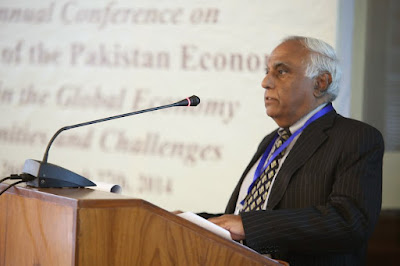
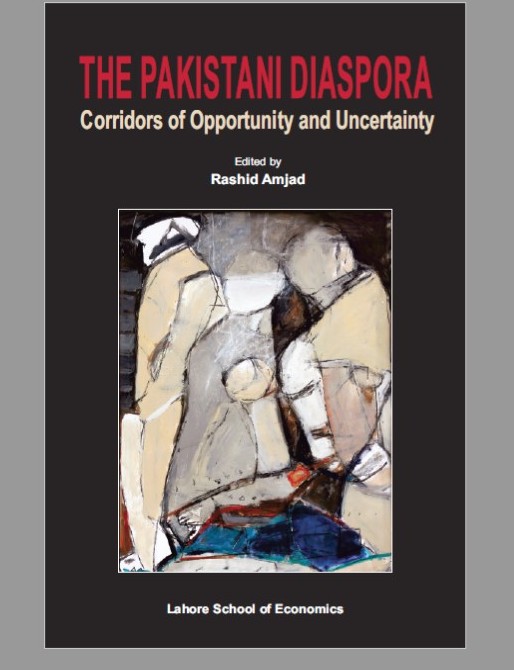
Friday, 8th December 2017, Center on International Migration, Remittances, and Diaspora (CIMRAD) organized a Book launch ‘The Pakistani Diaspora: Corridors of Opportunity and Uncertainty’ at the Lahore School of Economics.
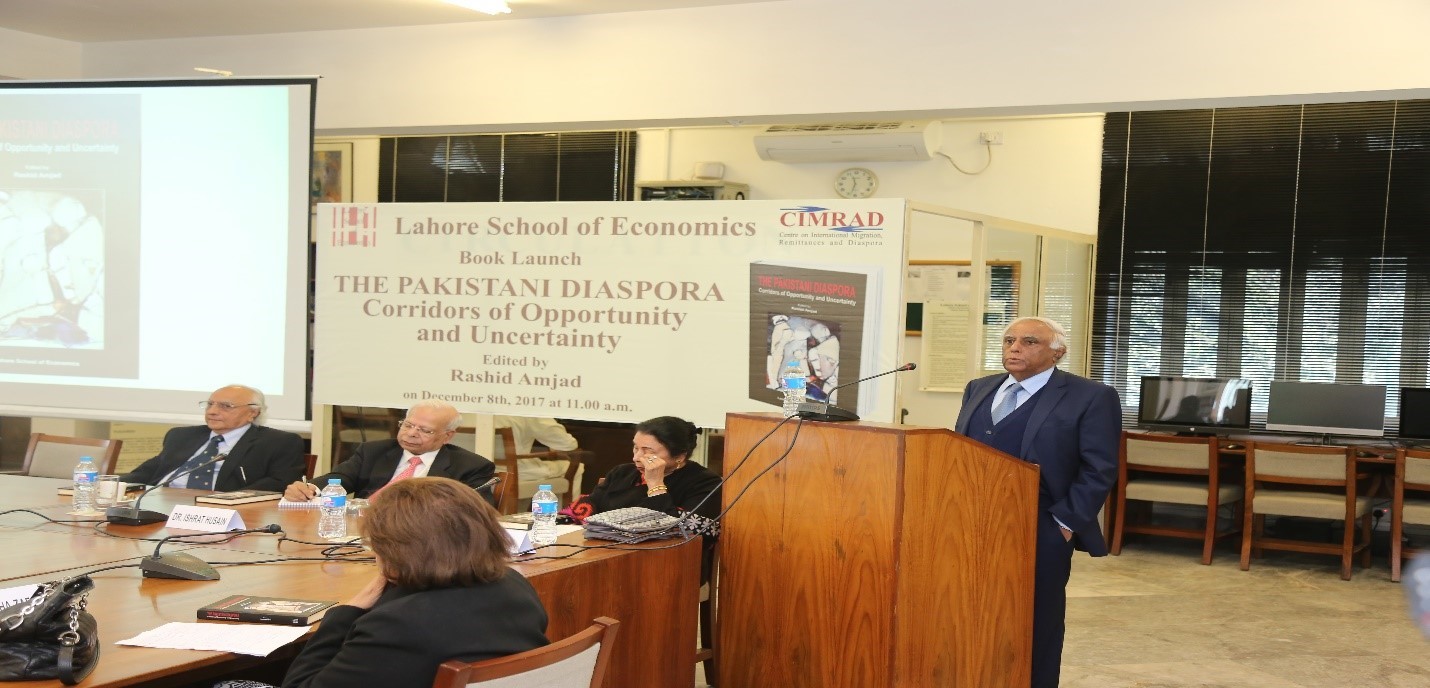
Rector LSE Dr Shahid Amjad Chaudhry, Professor of Economics and Director CIMRAD Dr Rashid Amjad, Professor Dr Nasra Shah from University of the Kuwait, and Professor Dr Fareeha Zafar from LSE, Representative of the World Bank Dr Abdul Waheed and chief guest former State Bank governor Dr Ishrat Husain were present.
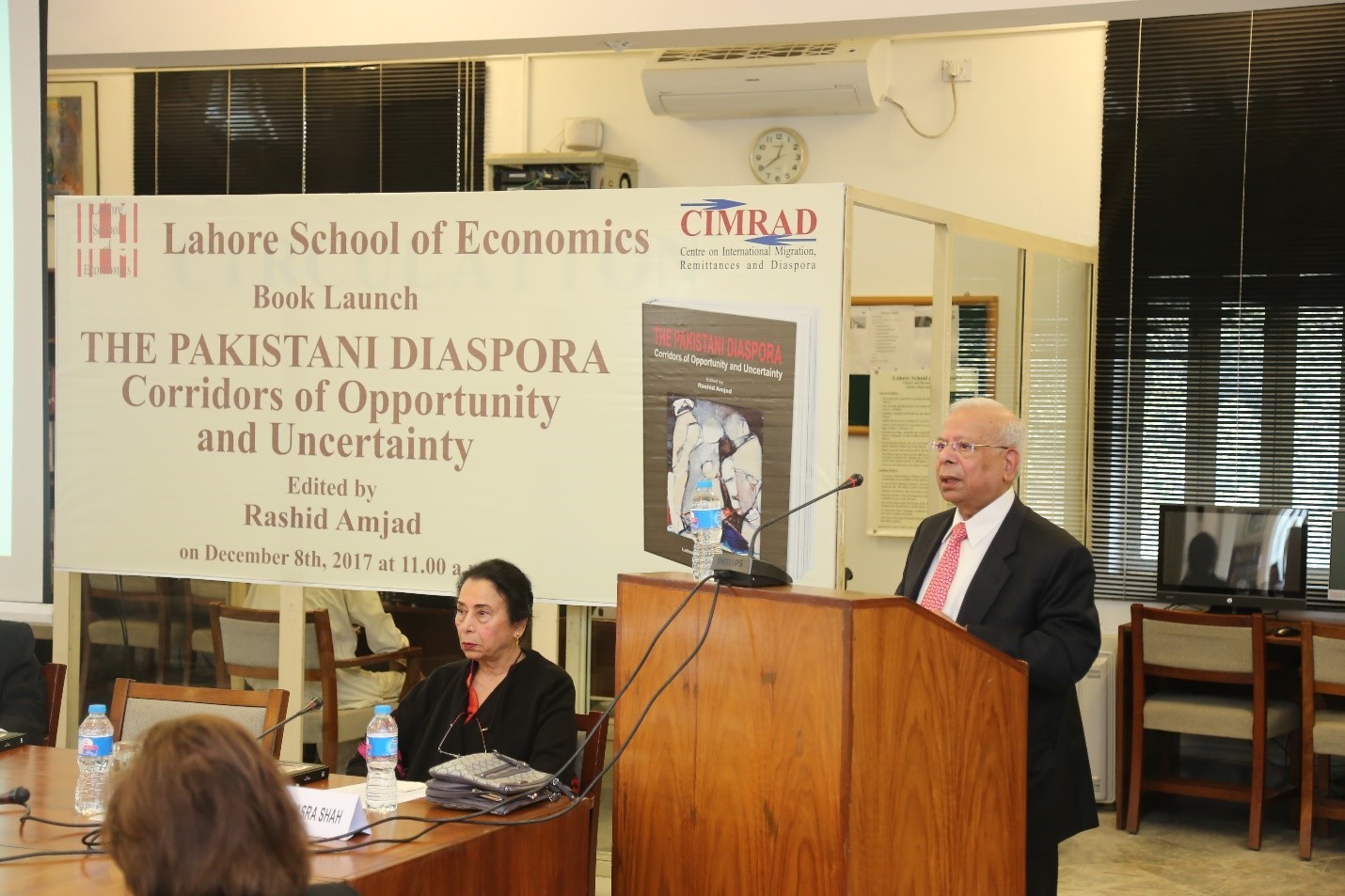
While addressing the ceremony Dr. Ishrat Husain, chief guest of the event, said that the book is being published at a time of mounting debate over the future of international migration and ensuing anxiety among migrants. He also appreciated that Lahore School of Economics was a pioneer in bringing migration and diaspora studies into light. He concluded by encouraging academics to focus more on panel and primary data on panel and primary data surveys to get more deeper insights into the scope of the migration and diaspora studies.
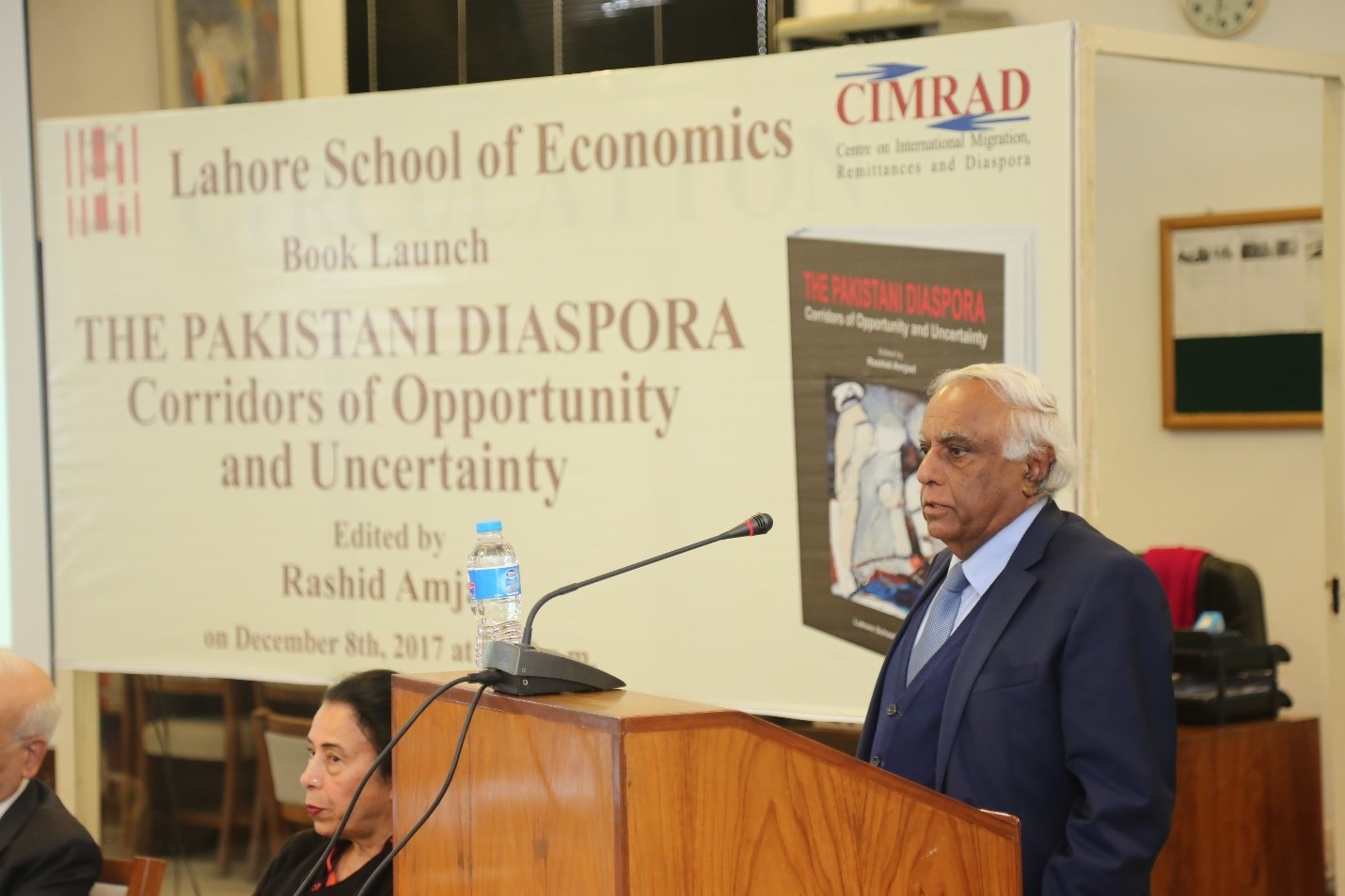
Dr Rashid Amjad, in his address, said that the book was unique in many respects. “It does not merely analyze the growth of diaspora in a historical context, but also provides valuable insights into the cost and benefits of migration, social remittances, and engagement of their families in the new host country and the families they leave behind,” he said. He also said that besides migration towards other countries, migration had been constant in 56 districts of the country, especially Karachi, central Punjab and few districts of Khyber Pakhtunkhwa and Balochistan.
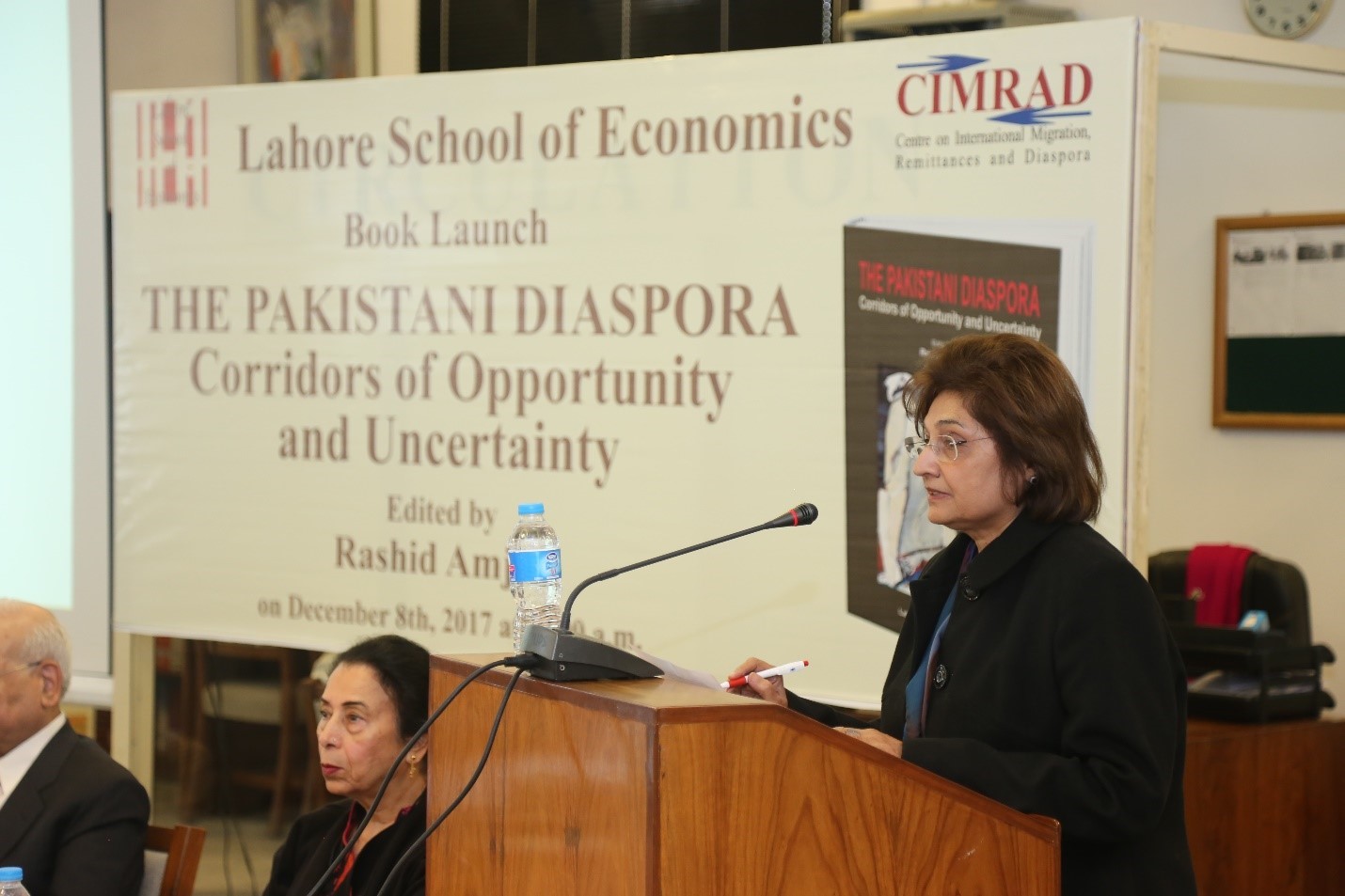
Dr. Fareeha Zafar, in her speech reflected upon the social side of Diaspora and remittances. The Pakistani Diaspora represents a close interaction between the host and the home country. Far more than it used to be in the past: most likely due to better transport facilities and to visit third and fourth generation Pakistani diaspora.
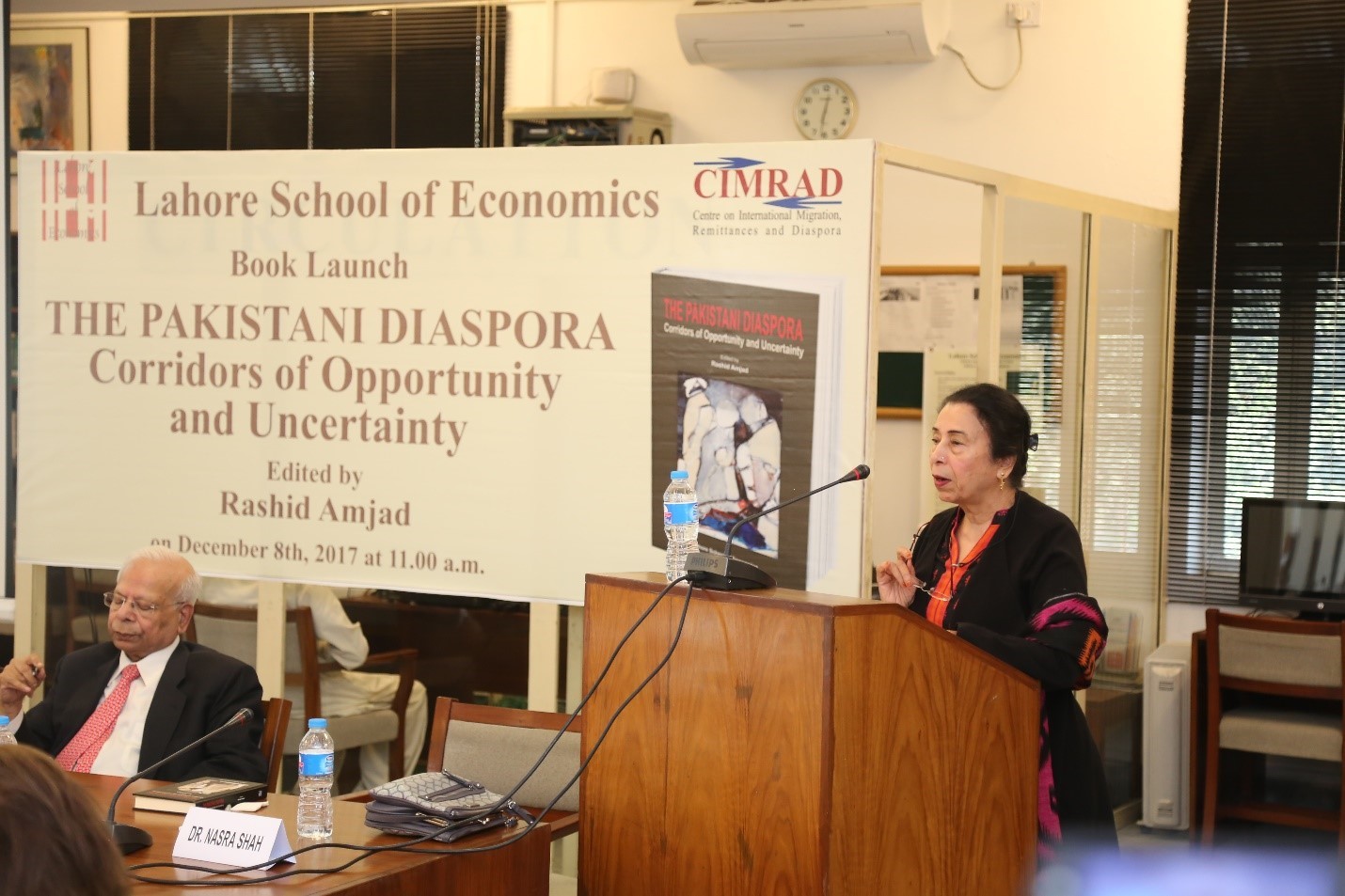
Dr. Nasra Shah, said that the trends of migration are changing and a downturn has already begun in the gulf. She suggests that policies should be devised for easing re-absorption of returnees in the home country.
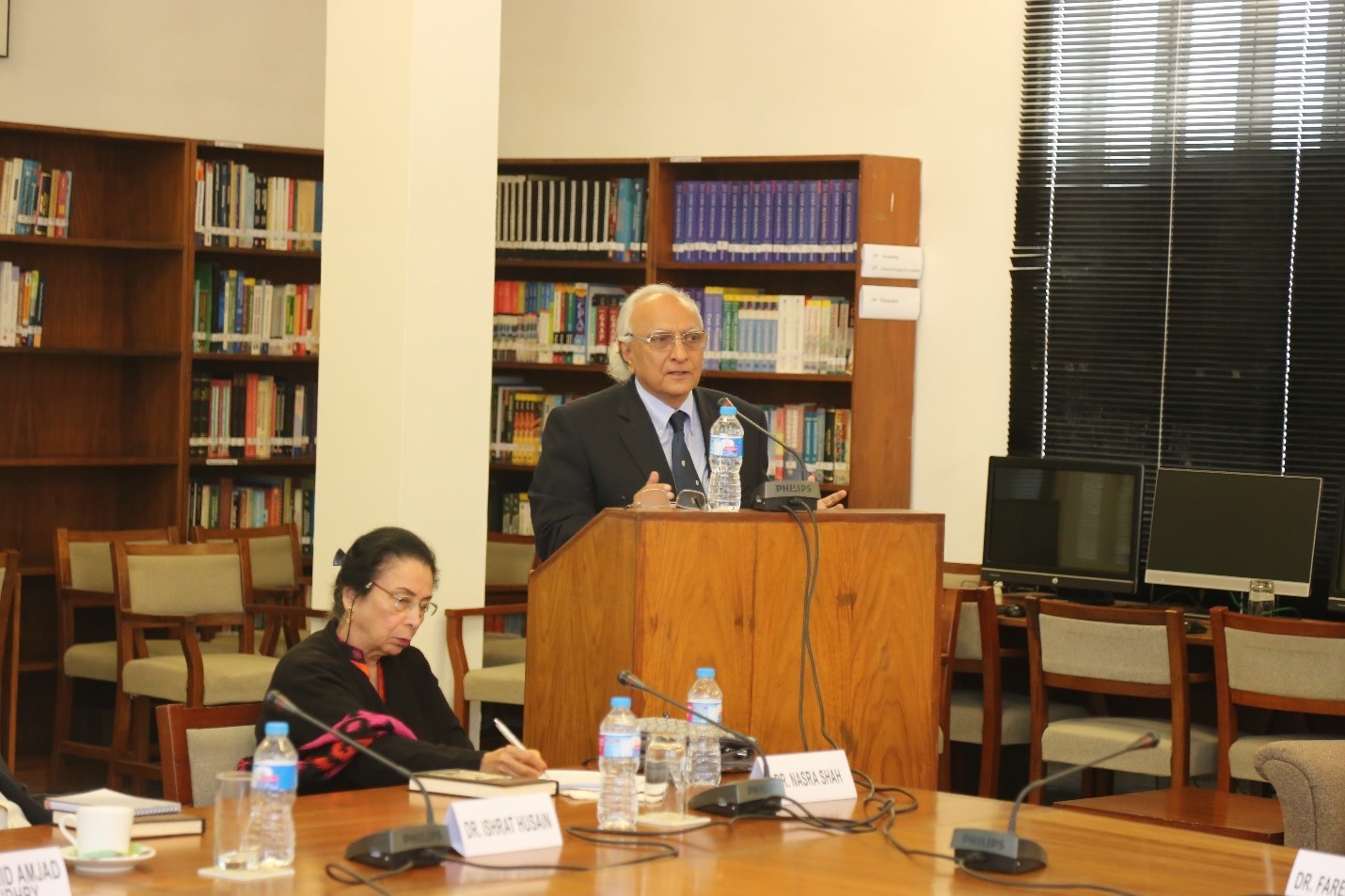
Dr Shahid Amjad, rector of the Lahore School of Economics, in his concluding remarks, suggested that Pakistan must develop safe and secure mechanisms to foster foreign investments and trade in Pakistan.