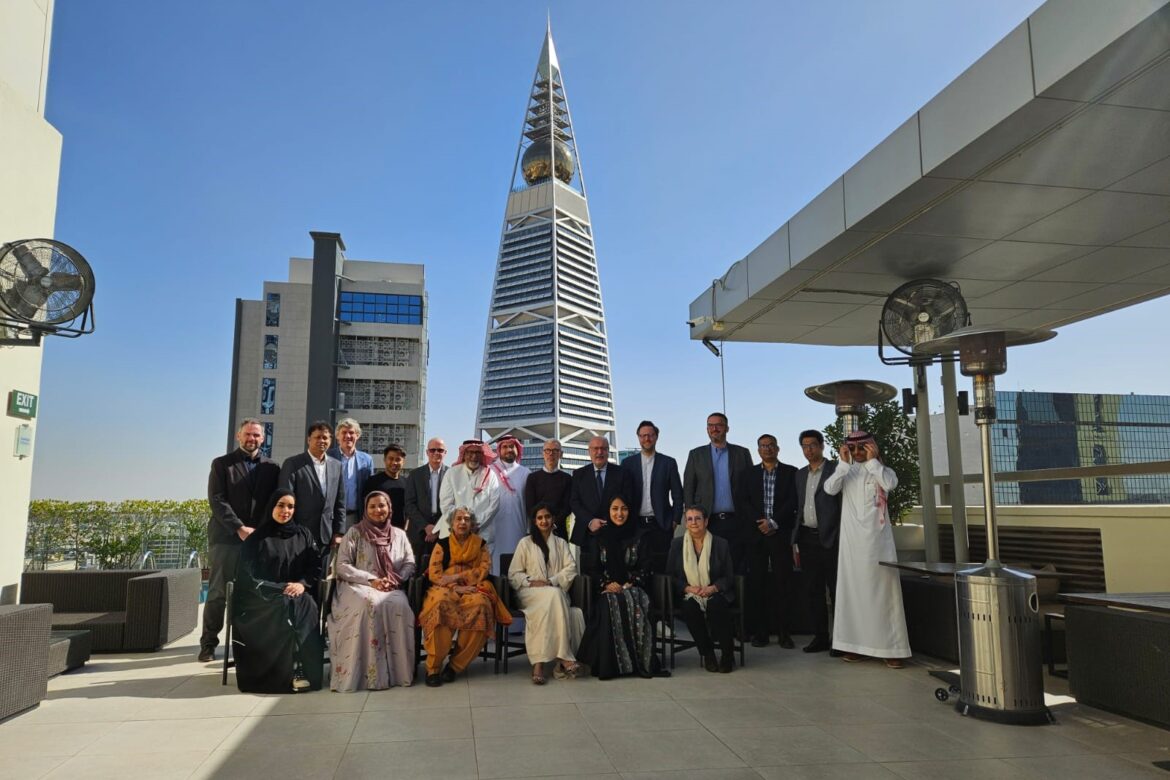
Dr. Nasra Shah presented her joint work with Ms. Memoona Qazi, titled, Most Favored Destination for Pakistani Migrants: Saudi Arabia, at a workshop organized by the King Faisal Centre for Research and Islamic Studies, Riyadh, on February 19th, 2024

Dr. Nasra Shah presented her joint work with Ms. Memoona Qazi, titled, Most Favored Destination for Pakistani Migrants: Saudi Arabia, at a workshop organized by the King Faisal Centre for Research and Islamic Studies, Riyadh, on February 19th, 2024

The workshop was titled Labor Migration Patterns and their Role in Economic Diversification and Sustainable Development in Saudi Arabia: Acceptance and Resistance Towards Achieving Saudi Vision 2030. It featured research exploring different aspects of migrant work in Saudi Arabia. Dr. Shah and Ms. Qazi’s work discussed the trends and patterns of Pakistani migration to Saudi Arabia since 1971. It also reflected on the role of Pakistani migrants in achieving Vision 2030 and the challenges they face. Informal migration processes and the role of sponsors (kafeels) in procurement of work contracts were particularly discussed. Moreover, this work highlighted the potential repercussion of the newly introduced skill certification rules on the future of Pakistani migration to Saudi Arabia.

Your Comment:

Related Posts

02

Jan
Print Media

Household Integrated Economic Survey shows 57pc surge in internet users across Pakistan as access reaches 70pc of homes

Published in Dawn on January 01, 2026 Household Integrated Economic Survey (HIES) 2024–25 on Thursday revealed the surge of up to 57 per cent in the individual internet users in Pakistan as household internet access rate increased from 34pc to 70pc. HIES — a yearly survey — conducted by the Pakistan Bureau of Statistics (PBS) is focused […]

30

Dec
Print Media

The ‘net economy’

By SYED HARIS AHMED Published in The Express Tribune on December 29, 2025 KARACHI: Pakistan’s economic discourse has long been dominated by familiar concerns: fiscal deficits, balance of payments pressures, and the performance of traditional export sectors such as textiles and agriculture. Yet, beneath these recurring challenges, a structural shift is quietly reshaping the economy. The country’s[…]