By Dr. Maznoor Ahmad
Published in The Express Tribune on July 14, 2025
ISLAMABAD:
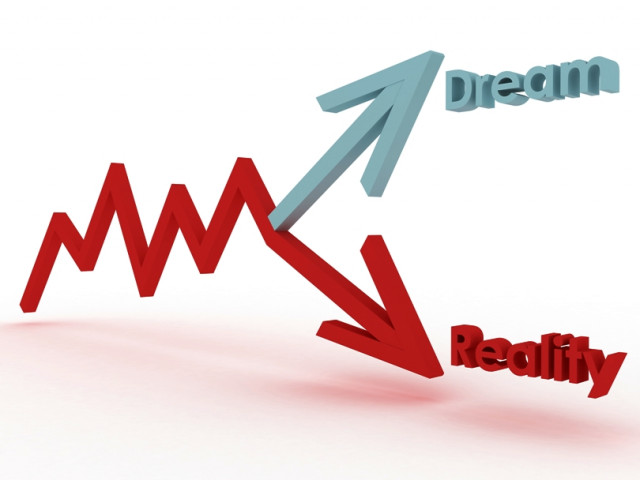
Why is there such disconnect between Pakistan’s booming stock market and its broader economy? While the stock market surged by over 85% in both rupee and dollar terms in 2024 and has already climbed another 60% in 2025, placing Pakistan among the world’s top-performing markets, manufacturing output, unemployment, and poverty have either deteriorated or remained stubbornly high.
The explanation lies in Pakistan’s deep-rooted structural imbalances. Heavy government involvement props up certain sectors through targeted interventions while excessively shielding others, which has stunted the growth of competitive industries. This divergence becomes clear when examining sectoral performance.
Over two-thirds of recent market gains have come from banking, fertiliser, and oil and gas sectors. A closer look reveals how government policies have driven their profits, often at the cost of broader private sector development.
The banking sector alone accounted for 40% of the total index profitability, largely driven by investing in government securities. By the end of 2024, over 95% of bank deposits, roughly Rs26 trillion, were locked in risk-free government bonds and treasury bills. If the government were not such a heavy borrower and interest rates were lower, banks would be forced to take more risk and extend credit to the private sector, including SMEs.
The fertiliser sector is another top performer, but its success is built more on market distortions than genuine innovation or efficiency. Dominated by four firms controlling 95% of the market, the industry continues to benefit from subsidised feedstock gas, despite the government withdrawing subsidies for some under IMF pressure. Over the past four years, urea prices have soared by 70%. Pakistani farmers now pay over Rs4,400 for a 50kg bag, compared to around Rs1,200 paid by Indian farmers. While this has boosted corporate profits and stock prices, it has eroded farmers’ purchasing power and undercut agricultural productivity.
The oil and gas sector’s gains come from different forces, but the government’s influence is again unmistakable. Progress on new discoveries, circular debt reduction, and early privatisation steps is encouraging. However, a primary driver of profitability has been the sharp rise in energy prices under the IMF-backed reforms. Aligning prices with market rates has strengthened corporate earnings but imposed a heavy financial burden on ordinary citizens.
By contrast, sectors like engineering, auto parts, and synthetic textiles, with a few bright spots such as Sazgar Engineering, have seen notable decline. Here, the recent tariff reforms offer a chance for revival. These industries can now expand their domestic footprint and, crucially, pursue global exports.
Take auto parts, for instance. As developed countries such as France, Spain, Germany, the US, and Japan reduce their export shares, emerging economies are filling the gap. Thailand, Turkey, and India now each export over $7 billion in auto parts annually, while Indonesia, Malaysia, and Morocco make exports worth between $1.5 and $2 billion. Pakistan’s exports, by contrast, are negligible at just $22 million.
If Pakistan’s private sector can seize the opportunity to integrate into global value chains, which account for nearly 70% of global trade, the country could join the ranks of fast industrialising economies. Rather than aiming to compete directly in finished consumer goods, where scale and branding are significant hurdles, Pakistan can position itself as a reliable supplier of auto parts and other intermediate inputs.
The government has finally taken meaningful steps through tariff reforms and initial structural adjustments. It is now up to the private sector to respond with innovation, investment, and an export-oriented mindset. Only then can the current stock market rally translate into broad-based industrial growth, job creation, and poverty reduction.
Without this shift, from profits propped up by policy distortions to those anchored in true productivity and competitiveness, today’s market boom risks remaining a fragile illusion rather than a launchpad for genuine economic transformation.
To ensure this transformation takes hold, it will be critical for policymakers to maintain coordinated follow-through on reforms and actively reduce bureaucratic micromanagement, so both businesses and industries can truly thrive.
The writer is a member of the PM’s Steering Committee on the Implementation of the National Tariff Policy. He previously served as Pakistan’s Ambassador to the WTO and as the FAO Representative to the United Nations in Geneva