Published in International Monetary Fund
About the Book
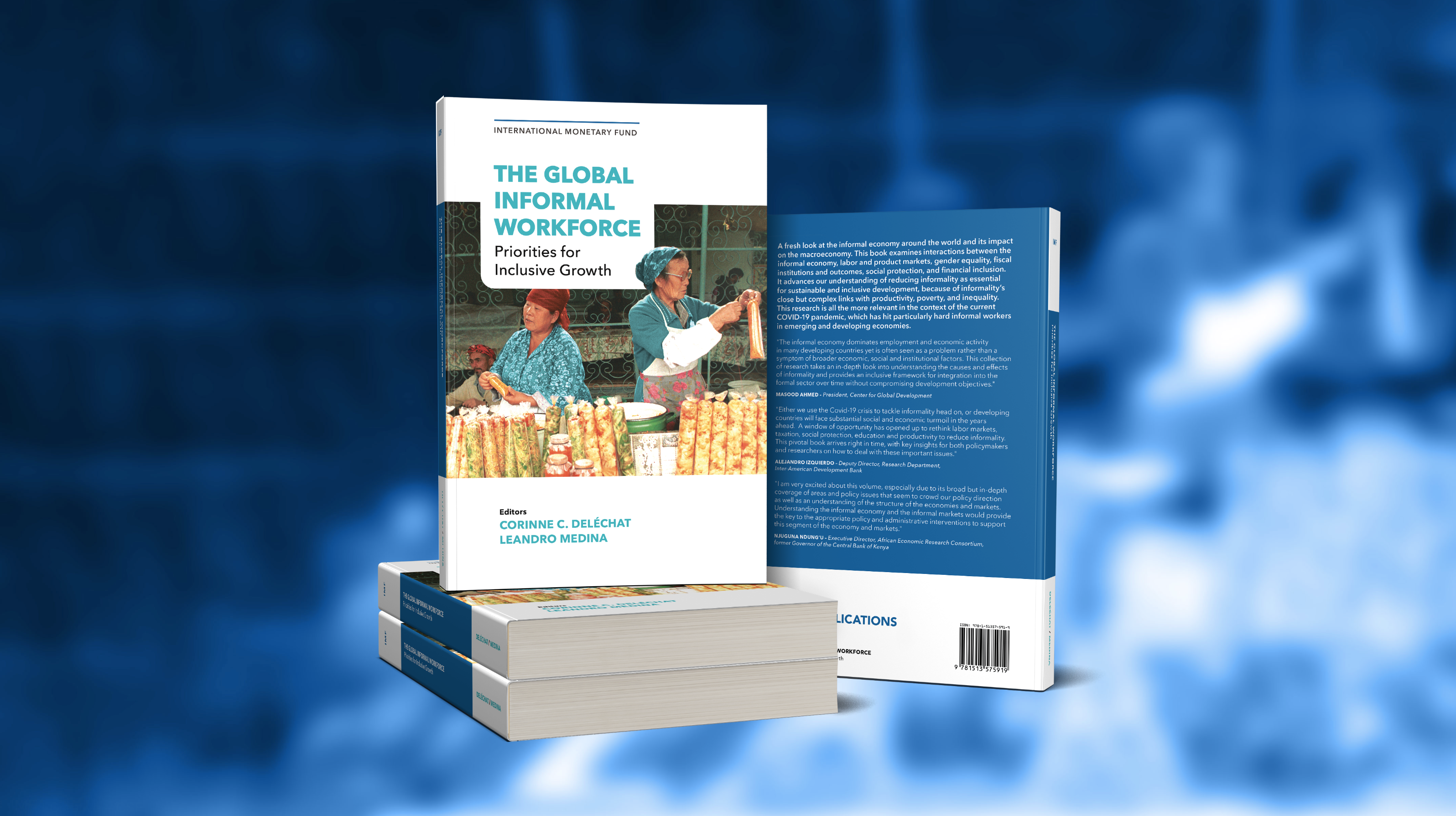
The new IMF book, entitled “The Global Informal Workforce: Priorities for Inclusive Growth,” which is being launched at the event, offers a timely and fresh look at the informal economy around the world and its impact on macroeconomic and development outcomes, analyzing the interactions between informality and labor and product markets, gender equality, fiscal institutions and outcomes, social protection, and financial inclusion.
The book sheds new light on the informal economy by looking in more detail at how to measure informality, analyzing its drivers and economic consequences, and discussing possible policy responses. A key message is sustainable and inclusive development requires a reduction in informality over time, but this process will inevitably be gradual because the informal sector is currently the only viable income source for billions of people.
Download here.
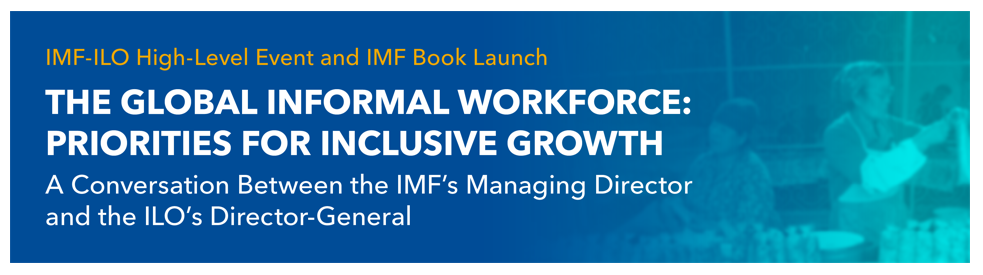
IMF-ILO High-Level Event
Join IMF Managing Director Kristalina Georgieva and ILO Director General Guy Ryder for a virtual conversation about recent developments in the informal economy on Friday, July 23 at 09:00 a.m. (ET). More than 60 percent of the world’s adult labor force, or about 2 billion workers, operate in the informal economy. The COVID-19 pandemic has hit informal workers and firms hard, particularly in developing countries where large segments of the population are not covered by existing social protection schemes and to give them improved access to opportunities and better working conditions has become an even more urgent priority.
Nozipho Tshabalala, CEO of The Conversation Strategists, will moderate the conversation, which will cover questions related to the informal economy, including:
- What exactly is the informal economy and how large and diverse is it within and across countries?
- What are the consequences of working in the informal economy for workers and their families?
- What has been the impact of the COVID-19 pandemic on informal workers and firms, and which policy responses will be most effective in addressing the issues that have arisen?
- How does informality relate to growth and inequality, including gender inequality?
- What can policy makers do to facilitate the gradual formalization of the economy and promote more resilient and inclusive growth?
Submit your own questions for the speakers either before or during the event using the following e-mail address: InformalEconomy@IMF.org