
By Samar Quddus, Published in The News, February 16, 2021
The 21st century mainly gave us the unabated war on terror, civil conflict, political disruption, climate change, and above all global epidemics that have now placed a chokehold on well-functioning economies of the world.
In this regard, the last 15 months have proved to be the most challenging, unpredictable and uncertain what with the outbreak of Covid-19. The unique novel virus has had an unprecedented impact on individuals as well as societies at large. In response to the crisis, worldwide lockdowns and restrictions on movement were imposed as the only strategy for containment of the deadly disease which itself has been causing serious predicaments to economic activities.
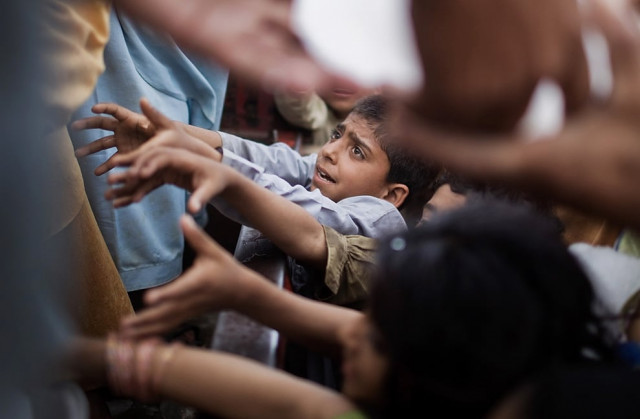
Overlapping disasters over the years have increased the severity of the virus and its effects in developing countries already struggling with various socio-economic challenges. Pakistan is no exception. The drastic measures taken in the wake of Covid-19 have undoubtedly had a disproportionate impact, with the poorest and low-income households more likely to suffer from poverty and hunger stemming from the virus-induced lockdown.
While the country was already off-track to achieve zero hunger by 2030, with 37 percent of the total population food insecure in 2018, it is felt that the situation will worsen in the coming years amidst extreme weather events, floods, pest invasions, food price hikes and the ongoing coronavirus pandemic.
Besides food insecurity, the prevalence of undernourishment in the country is also high and persistent, leaving children more susceptible to viral infections. Almost 40 percent of the children are stunted countrywide, making Pakistan as the third highest country with stunted children in the world. The burden of wasted children below the age of five is also as high as 17 percent, surpassing the internationally agreed emergency threshold of 15 percent.
Similarly, children are highly micronutrient with almost half of children in the country reported to be anemic. The numbers are expected to worsen in the long term as nutrition services in the country are severely disrupted during the pandemic year. According to a report published by Unicef, the fundamental and life-saving nutrition services were reduced by 30 percent during the early months of the pandemic around the globe. In Pakistan, the anti-polio campaign had to be suspended in its first-round, depriving almost 36 million children from its full benefits.
Despite the fact that the Covid-19 spread has remained moderate in the country compared to many other countries, the food security and hunger situation has still been worsened by the partial lockdown that particularly impacted food supply and prices. From recent data, price hike in items of daily use rose to the highest level in the last 12 years, from 12.6 percent to 14.6 percent.
As a main driver of high inflation, food prices continue to rise adding more to the miseries of low-income household and daily wagers. The rising trend in food prices, coupled with real income losses and rising poverty, has compelled low-to-middle income households to decrease their daily calorie consumption. The sticky domestic food inflation has been forcing households to further cut down their health and education expenses in order to meet their necessary dietary requirement, threatening to set back progress even further.
Unfortunately, the sitting government is failing miserably to control the surge in food prices. Government-initiated relief programs like Ehsaas Emergency cash and youth loans only serve a certain segment of society while a large number of people are vulnerable to hunger and food insecurity at different levels.
The government not only proved futile in penalizing wheat and sugar hoarders and speculators – one of the major causes of the food shortage that resulted in the price hike – but also failed to predict the market and heed the disruptions in the food supply chain during the pandemic.
Panic buying of essential food items since the Covid lockdown generated a supply gap but no arrangements have been made beforehand to bridge the gap through early imports. As a result, food prices have continued to soar. Another great supply shock the country has been facing in the aftermath of Covid-19 is more related to the logistics of the movement of food and production cost that caused farmers to hike up selling rates.
Addressing market mechanisms to ensure food availability and people’s access to quality food is important as a majority of the population (almost 80 percent of households) depends on the market for food purchasing. In the absence of a well-functioning market, all these households are most likely to suffer food insecurity especially at times when socio-economic indicators are already getting worse due to the Covid-19 eruption and its awful effects.
The series of shocks and unsolicited events of 2020 reveal how delicate the healthcare system and food and nutrition security of the world and developing countries in particular are really. Even though there are hopes to get back to normal with the coming of the Covid vaccination, the current crises have revealed that the world is woefully unprepared to cope with the uncertainty that has caused havoc to the human environment, livelihood, health and food security system.
A more inclusive, resilient and sustainable policy design is needed to achieve optimal health outcomes and zero hunger. Structural factors such as ineffective coordination between central and provincial governments, inadequate health facilities and limited rural development as well as poor infrastructure for outreach to rural areas all collectively exacerbate the impacts of such crises.
Furthermore, the tradition of discontinuity of policies with a change in the government in Pakistan results in programmatic changes around sustainable food security and agricultural production. The need of the hour for the government is to recognize innovative and technology-based alternative solutions to support the food security system and agricultural practices in the country along with continuation and expansion of the existing social protection measures.
The writer is pursuing an MPhil in development studies at the Lahore School of Economics.
Email: samqk11@gmail.com