
By Shahid Iqbal
Published in DAWN on February 04, 2022
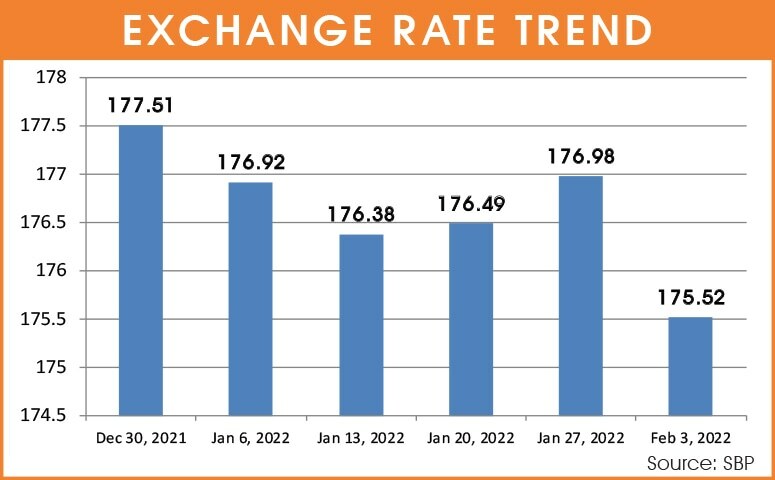
KARACHI: The exchange rate got the much-needed boost on Thursday, as the rupee jumped 0.51 per cent against the US dollar after the International Monetary Fund (IMF) approved a $1 billion loan as part of a bailout package to Pakistan.
The rupee rose 89 paise against the dollar in the inter-bank — its biggest single-day gain since Dec 31.
Federal Minister for Finance and Revenue Shaukat Tarin announced that the IMF had revived Pakistan’s $6bn loan programme after the country met several conditions of the global lender in recent weeks.
The IMF wanted Pakistan to rein in state spending, increase tax collection and make the central bank more independent.
Gains 89 paise to reach Rs175.52 against greenback in inter-bank market
Pakistan had to go to the IMF in November 2018 to save the economy from a $20bn current account deficit, which pushed the country close to default and a crisis was waiting for the new government demanding immediate improvement in its foreign exchange reserves.
The government managed to secure the $6bn Extended Fund Facility in July 2019, paving the way for inflows from other sources.
The much-needed tranche approved on Thursday was initially to be released last year. However, differences over financial management emerged last year and the government had to go through long painful negotiations with the IMF to resume the funding.
The government had to pass an interim budget to increase its revenue and a bill granting independence to the State Bank of Pakistan (SBP).
“There was a feeling in the banking market that more dollars would come after the revival of the IMF loan, helping the local currency appreciate against the dollar,” said Atif Ahmed, a currency dealer in the inter-bank market.
According to SBP data, the closing rate in the inter-bank market was Rs175.518 on Thursday, which was the rupee’s highest single-day recovery after Dec31, when the local currency gained Rs1 against the dollar.
“The pressure for the dollar demand is still high, but declining reserves of the State Bank are more critical that may defuse the encouraging sentiment emerging out of the IMF’s loan revival,” Mr Ahmed said.
The open market did not react to the IMF loan approval, as the dollar rate remained unchanged at Rs177.50 over the previous day.
The latest disbursement of $1.059bn brings Pakistan’s total draw against the Extended Fund Facility programme for budget support to about $3.027bn.
The IMF said the programme had strengthened the country’s fiscal buffers before the start of the Covid-19 pandemic, and a strong economic recovery has taken hold since the summer of 2020.
But it warned that a widening current account deficit and currency depreciation had reinforced domestic price pressures.
The country’s GDP growth is expected to reach 4pc this year, but the economy remains vulnerable to flare-ups of Covid-19, tighter international financial conditions, a rise in geopolitical tensions and delayed implementations of structural reforms, the IMF said.