By Shahid Iqbal
Published in DAWN on January 25, 2022
KARACHI: The State Bank of Pakistan (SBP) has kept its benchmark interest rate unchanged at 9.75 per cent in its latest monetary policy and signalled that borrowing costs would remain steady for now, as recent tax increases were expected to curb demand and reduce the country’s budget deficit.
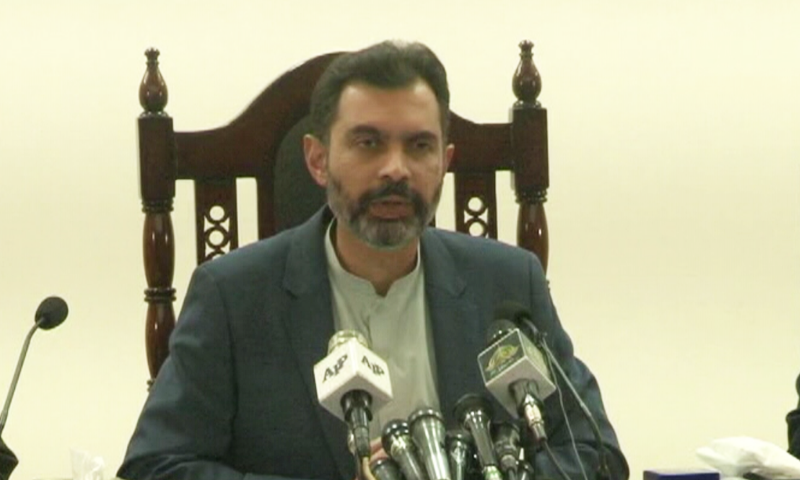
“There’s no need for further tightening at the moment because of the government’s fiscal policy,” SBP Governor Dr Reza Baqir told a news conference on Monday.
He said economic indicators were within the target, which allowed the central bank to keep the interest rate unchanged at 9.75pc.
In its previous monetary policy announced last month, the SBP increased the policy rate by 100 basis points from 8.75pc and revised targets for inflation, current account deficit and growth rate and changed the perception about the rising import bill.
Cuts growth forecast to 4.5pc from 5pc for FY22
Since September, the central bank has lifted the rate by 275 basis points to tackle a falling rupee, high inflation and a current account deficit. It indicated last month that it expected the monetary policy setting to remain “broadly unchanged” in the near term.
Central banks typically increase rates to fight inflation and lower them when economies are weak, as they were during the Covid-19 pandemic.
In the latest monetary policy, SBP kept the rate unchanged in line with the forward guidance provided in the last monetary policy statement, Mr Baqir said.
“At that time, the MPC had considered the measures taken to lower inflation and keep the ongoing economic recovery sustainable. These measures include a cumulative 275 basis point increase in the policy rate, higher bank cash reserve requirements, regulatory tightening of consumer finance, and curtailment of non-essential imports,” the SBP said in its monetary policy statement on Monday said.
Since the last meeting on Dec 14, several developments suggested that these demand-moderating measures were gaining traction and had improved the outlook for inflation, it said, adding: “Recent economic growth indicators are appropriately moderating to a more sustainable pace.”
The SBP also cut its projection for the gross domestic product (GDP) for the ongoing financial year to about 4.5pc from 5pc previously.
Mr Baqir said that while headline inflation would continue to remain high “in the near term” due to elevated global commodity prices, its momentum was slowing.
The central bank said inflation was expected to decline during the 2023 fiscal year towards its medium-term target faster than previously expected due to the government’s fiscal policy and moderation in economic activity.
“The MPC was of the view that current real interest rates on a forward-looking basis are appropriate to guide inflation to the medium-term range of 5pc to 7pc, support growth, and maintain external stability. If future data outturns require a fine-tuning of monetary policy settings, the MPC expected that any change would be relatively modest,” the bank said.
The SBP governor also said that the current account deficit was stabilising and remained projected at about 4pc of GDP. The current account deficit appears to have stopped growing since November and the non-oil current account balance is expected to achieve a small surplus for the current fiscal year, he added.