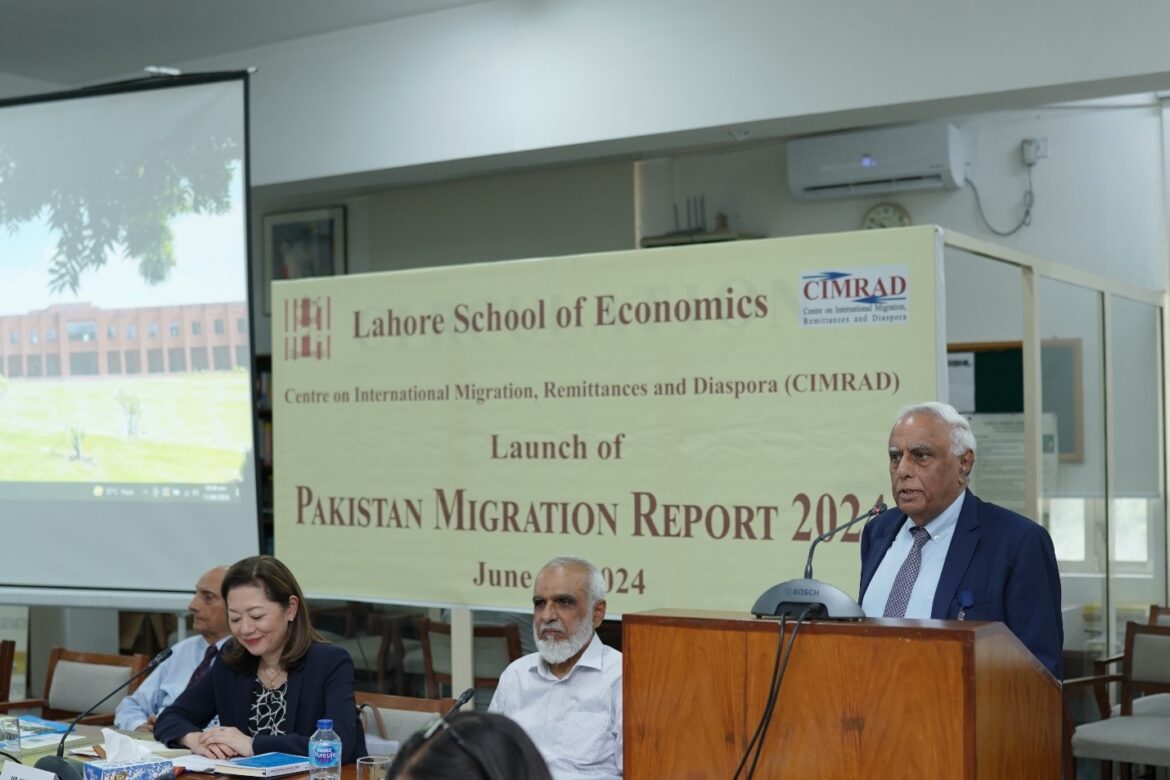
The Pakistan Migration Report 2024 is the third in the series published biennially by CIMRAD. This report addresses the key questions of brain drain – exodus of high-skilled professionals, irregular migration, and trends observed in worker remittances. It draws on official outmigration data to show that it has returned to pre-pandemic peak levels and low-skilled workers still make up the majority. Moreover, the report shows that trends in remittances do not mirror the increased out-migration indicating wide use of unofficial channels. The report is now available online and can be found here.
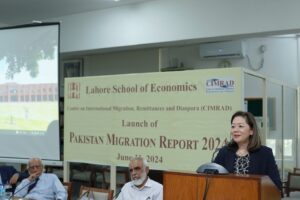
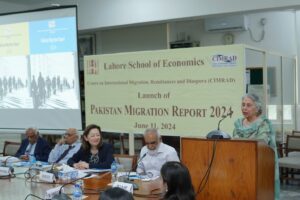
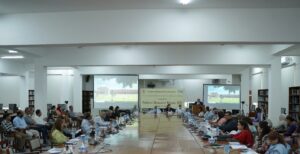
The launch ceremony was attended by Ms. Mio Sato, Chief of Mission, International Organization for Migration (IOM), as the Chief Guest. Other distinguished guests at the event included Dr. G. M. Arif, Ex-Joint Director Pakistan Institute of Development Economics, and Ms. Raana Rahim, Country Coordinator, International Centre for Migration Policy Development (ICMPD). Proceedings of the ceremony opened with a welcome address by Dr. Shahid Amjad Chaudhry, Rector, Lahore School of Economics. Director, CIMRAD, Dr. Rashid Amjad, briefed the attendees on the centre’s research engagements and contributions to migration research in Pakistan. Key findings of the Pakistan Migration Report 2024 were shared by the CIMRAD team led by Dr. Nasra Shah, Professor of Demography at the Lahore School of Economics.
Follow-up discussions on the report’s findings cantered on three key themes: risks of irregular migration, government’s capacity development to ensure safe, orderly and dignified migration, and the dynamics of skills dividend. On the subject of irregular migration, Ms. Raana Rahim highlighted lack of awareness as a key reason for uninformed migration choices. Sharing insights from her experience, she emphasized the need for government intervention for public awareness campaigns and educational initiatives. Ms. Rahim also called for effective cooperation between origin, transit, and destination countries to ensure regular migration channels are accessible to all.
Dr. G. M. Arif brought in a positive perspective on the skills-related aspect of migration, discussing how it enables upskilling of the workforce. He elaborated on how returning migrants bring with them better skillsets, valuable work experience, and new ideas which benefit the economy and society. Dr. Arif observed that international migration brings skills dividends and results in brain gain for both host and home countries.
During her talk, the chief guest of the event, Ms. Sato commended CIMRAD’s continued efforts to documenting and analysing patters of migration in the context of Pakistan. She noted that migration has historically served as a driver of economic and human development of people in host as well as home countries. Thus, it is an important subject of public policy and requires building governments’ technical capacity to address its complex challenges, such as irregular migration and skills alignment for labour mobility. Ms. Sato emphasized that Pakistan should prioritize academic mobility by building linkages between higher education and research institutions which could facilitate reintegration of returning migrants. The IOM Chief advocated for evidence-based and people-centric solutions for issues at every stage of migration – pre-departure, arrival, stay, return, and reintegration.
Dr. Shahid Amjad Chaudhry viewed migration as a viable solution to Pakistan’s high population challenges. He commented that the country had the potential to meet the global demand for education and healthcare professionals and benefit from remittances and brain gain in return.
Full text of Ms. Sato and Ms. Rahim’s addresses can be accessed here and here.