Published in The News on November 21, 2022
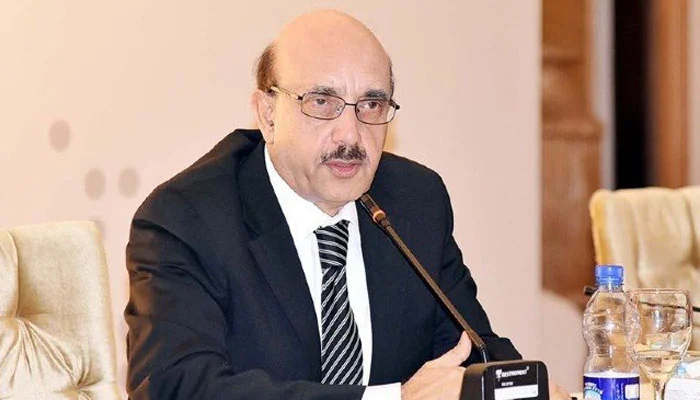
WASHINGTON: Pakistan Ambassador to the United States Masood Khan said the recent momentum in Pak-US relations has opened up vistas of opportunities in furthering Pak-US cooperation in critical areas including the agriculture sector.
The Ambassador made these remarks while addressing a webinar on ‘Pak-US Cooperation in Agriculture Sector’ which was hosted by Dr Iqrar Ahmad Khan, Vice-Chancellor of the University of Agriculture Faisalabad, and attended by leading area experts from public and private sectors, research institutes, agriculture departments, entrepreneurs and representatives of farmers community of Pakistan.
“Pak-US ‘Green Alliance’ can potentially serve to revolutionise the agriculture sector of Pakistan with the help of US expertise and would also significantly help in cementing the goodwill created between the two countries by Green Revolution in past,” he said.
The webinar was organised to identify potential areas of cooperation between Pakistan and the United States and interventions needed to optimize agricultural yields through the introduction of weather-resistant and climate-resilient seeds, helping Pakistani farmers reduce costs and maximizing output and most importantly to stave off any situation involving food security.
Addressing the participants, Khan said that the US government, universities, research institutes and the private sector was willing to join hands with Pakistan in addressing issues related to the agriculture sector. He underscores the need for capitalising on this unique opportunity to create a win-win partnership between the two countries.
Khan said that the goal of revolutionizing agriculture sector needed an innovative approach, a concrete strategy with delineated goals, sustained efforts and robust cooperation among all stakeholders including government departments, universities and the private sector. He said that the farmers’ community and civil society were important stakeholders while chalking out future roadmap vis-à-vis addressing challenges in the agriculture sector and promoting greater Pak-US cooperation.
“The interest being shown by the US side and the existing frameworks including Trade and Investment Framework Agreement between Pakistan and the United States provide us with solid foundations to enter into a robust partnership, once again, in the agriculture sector,” Pak Ambassador said.
Khan thanked Dr Iqrar Ahmad Khan, Vice-Chancellor of the University of Agriculture Faisalabad, for bringing all stakeholders on a platform to work together for deliberating and suggesting ways and means enhance Pak-US cooperation in this critical area.
Dr Iqrar Ahmad Khan apprised the participants that the University of Agriculture Faisalabad (UAF) enjoyed strong ties with Washington State University (WSU).
He informed the participants that in order to overcome the effects of climate change on the wheat crop, Washington State University (WSU) shared heat tolerant wheat germplasm which was being introduced and tested.
He said that the two universities were working closely in the areas of identification and implementation of cutting-edge technologies, exchange of climate-resilient wheat germplasm, manpower training and capacity building. He further informed the participants that UAF has been working on the introduction of soybean as a new multipurpose crop in Pakistan in collaboration with the US Department of Agriculture, Soybean Innovation Lab (SIL), University of Illinois and North Dakota State University.
UAF and the University of California, Davis, USA, were also collaborating in the area of high-yielding and disease-resistant cultivars of chickpeas.
Dr Iqrar Khan emphasized the need for greater focus on technology transfer and implementation of intellectual property rights laws, in letter and spirit, to encourage US companies to invest in the seed sector.
Syed Babar Ali, the founder of the National Fertiliser Corporation, underscored the importance of seeds as the foundation of the agriculture sector has a critical role in enhancing crop yield. Emphasizing the need for out-of-the-box solutions, Syed Babar Ali called for radically liberalising regulatory regime vis-à-vis seed processing, procurement, distribution and use.
Muhammad Asim, country lead of Monsanto Bayer, highlighted the importance of ensuring a level playing field, implementation of IP protection laws and bilateral collaboration in technology transfer areas.
Saad Khan emphasized the need for developing a local partnerships with US companies and streamlining the process of multiplication of seeds.
Renowned agriculturist Rabia Sultan underscored the need for putting in place a science-based regulatory regime and stewardship of new varieties of seeds.
Senator Nauman Wazir Khattak identified viability gap funding and provision of incentives for seed processing plants as major areas for promoting the introduction and adoption of quality seeds for various crops.