
By Aisha Khan
Published in Dawn on March 26, 2023
IN its original formulation, diaspora referred to the dispersal of the Jewish people following the destruction of the First Temple. In the mid-19th century it was adopted by the Moravian Church to describe its congregation, and in the 20th century it was extended to a limited number of peoples dispersed beyond their homeland, traumatically or otherwise. However, more recently it has been applied to a wide range of migrant communities that are believed by observers to exhibit some sort of sociocultural or political cohesion in host countries.
The United Nations Populations Division estimates that around 266 million people live outside their country of origin. Some countries like Israel and Armenia have diaspora populations greater in number than their own populations.
The concept of diaspora is quite broad and different disciplines tend to use it to mean different things. However, there is prevailing consensus that diaspora is a group that recognises its separateness based on common ethnicity/nationality, lives in a host country, and maintains some kind of attachment to the home country. This attachment can be cultural or have latent or overt tendencies towards political action and a desire for engagement through active measures such as sending remittances, funding civic projects, forming groups to lobby for and using different platforms to build a constituency of support for the home country in host countries. Organised diaspora communities can also promote trade and foreign direct investment, create businesses, and spur entrepreneurship and transfer new knowledge and skills.
The dynamic power of the diaspora enables them to become influencers who play a significant role as actors in international affairs. The Chinese and Indian diasporas are the best examples of economic power.
The enormous potential of the diaspora is growing rapidly, with new forms of media and communications technologies enabling them to play a transformational role as productive members of the host country, and agents of change for the country of origin. Sustained engagement with the diaspora, especially towards building physical capital and productivity, helps in boosting job creation, living standards and higher growth.
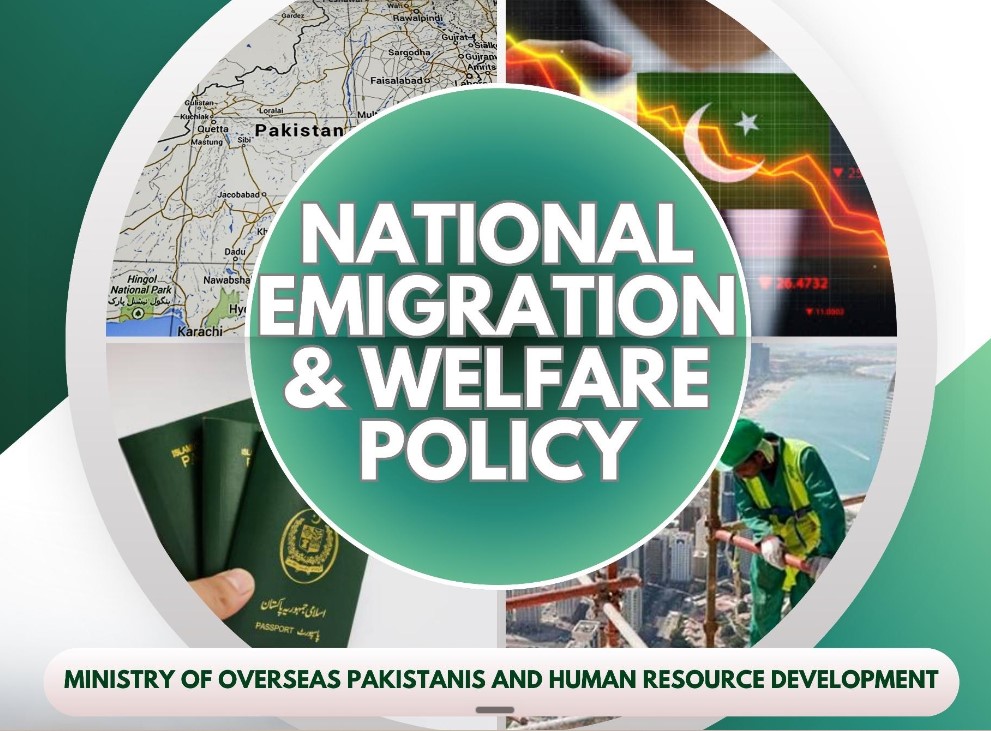
The Pakistani diaspora is a national asset that should be engaged and deployed as such. Climate change offers an opportunity for harnessing this potential in sectors that will crystallise the government’s strategy for attracting talent. At present, the Pakistani diaspora is not one cohesive whole. It is made up of diverse sub-groups without a strategic vision of strengthening country interests. Divided, the diaspora is not likely to self-organise itself in ways that maximise its political or economic leverage, complicating engagement. But this does not mean that a positive loop cannot be created for collaboration at higher levels of policymaking through engagement with universities, large corporations and industry bodies.
A mapping of the diasporic spread, including their size and distribution around the world can help in gauging their potential impact as enablers and influencers. Channelling this vital resource for long-term strategic investment can pay rich dividends.
With globalisation on the rise, Pakistan should move beyond looking at its diaspora solely as a source of remittances and study the example of countries that have converted their ‘brain drain’ into a ‘brain chain’ that helps in the circulation of technology, capital, managerial and institutional expertise.
Deepening strategic engagement with the diaspora can advance economic links, and build transnational networks for trade, investment and innovation. This shift in perception from multicultural narratives to partners in development can open doors for wider engagement.
Pakistan can use its embassies as focal agencies to attract professional diaspora talent, using an apolitical approach to initiate engagement. The new age, tech-savvy diplomats can widen engagement, beyond conventional approaches, to define the contours of climate diplomacy for enhanced cooperation in climate action.
Diaspora clusters can make direct and indirect contributions in helping to build a resilient future for Pakistan. This can include support in advocacy, strengthening capacity, technical back stopping, sharing research inputs and resource mobilisation for building resilient infrastructure, among others. The options for creative engagement are many. With the release of the Sixth Assessment Report 2023, it is clear that the climate crisis has now become a planetary crisis. Pakistan needs all hands on deck to cope with this existential threat. It is time to bridge fault lines and put Pakistan first.