By Usman Hanif
Published in The Express Tribune on June 11, 2026
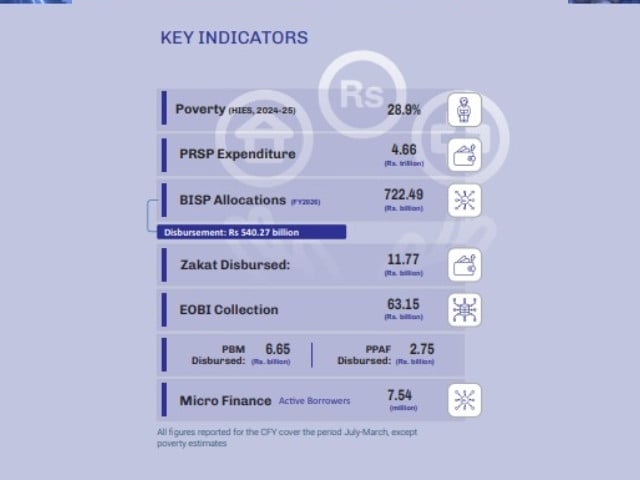
Pakistan’s poverty rate has climbed to 28.9% despite signs of economic recovery and improved macroeconomic stability, highlighting the disconnect between headline growth figures and living standards for millions of households.
“Pakistan’s poverty declined over the long term, from 50.4% in 2005-06 to 21.9% in 2018-19, before rising to 28.9% in 2024-25,” the Economic Survey stated.
According to the Pakistan Economic Survey 2025-26, poverty increased significantly from 21.9% recorded in 2018-19, while income inequality also widened, raising concerns about the inclusiveness of the country’s economic rebound. The survey showed the national Gini coefficient, a key measure of income inequality, rose from 28.4 to 32.7 during the same period.
The findings come at a time when the government is touting economic stabilisation achievements, including 3.7% GDP growth, lower fiscal deficits, stronger foreign exchange reserves and improved investor confidence.
Economists say the latest poverty figures suggest the benefits of stabilisation have yet to reach a large segment of the population, particularly in rural areas and among low-income households.
The survey showed rural poverty stood at 36.2%, more than double the urban poverty rate of 17.4%, underlining persistent disparities between cities and the countryside.
The rise in poverty comes after years of economic shocks, including inflationary pressures, currency depreciation, floods and slower income growth. Although inflation has eased considerably from crisis levels, households continue to struggle with elevated food, energy and transport costs accumulated over recent years.
The government argues that social protection programmes have helped cushion the impact on vulnerable groups. Pro-poor expenditures reached Rs4.66 trillion during July-March FY26, compared with Rs4.25 trillion a year earlier.
The Benazir Income Support Programme (BISP), the country’s largest social safety net, received an allocation of Rs722.49 billion in FY26, with Rs540.27 billion disbursed during the first nine months of the fiscal year.
Social security and welfare spending increased to Rs822.21 billion, while disaster-related expenditures rose sharply to Rs224.92 billion amid climate-related challenges and recovery efforts.
Despite the rise in poverty, the survey noted improvements in several social indicators. School attendance, literacy levels, internet access, immunisation coverage, sanitation facilities and access to cleaner fuels all improved between 2018-19 and 2024-25.
Analysts argue that while macroeconomic stabilisation is a necessary prerequisite for sustainable growth, stronger job creation, productivity gains and investment are required to meaningfully reduce poverty levels.
The finance minister acknowledged the situation and stated that traditional economic indicators are not ensuring job growth. He added, “We need a paradigm shift in the age of AI.”