
This paper argues that concerns about the resilience of essential services require a reassessment of the impacts of migrant workers and the design of labour migration and related public policies. The Covid-19 pandemic highlighted the high share of migrants among ‘key workers’ who deliver essential services, notably in agriculture and food production, health services and social care. We review existing insights on the role of migrant workers in essential services, which emphasise employers’ incentives as well as different national policies and institutional settings. We introduce the notion of systemic resilience to this context and outline key determinants of systemic resilience that have been identified in several disciplines but not yet applied in the field of labour migration. Given the importance of essential services, the paper argues that bolstering resilience should be a key objective for policy makers, and systemic resilience should be a criterion in impact assessments of migrant workers and in the design of labour migration and related policies. We find that this requires broader approaches to consider entire systems for the provision of essential goods and services, more attention to the medium and long run, and thinking beyond the protection of domestic workers. As an agenda for new migration research, we discuss three types of comparative analysis needed to examine the various ways in which migrant workers might affect systemic resilience.
Related Posts
WB wants swift action on reform measures
By Khaleeq Kiani Published in Dawn on October, 03, 2026 ISLAMABAD: The World Bank on Friday called on the government to expedite the implementation of policy actions under its $20 billion economic reform partnership to harmonise general sales tax (GST), provincial agriculture and property taxes, and remove regulatory constraints to achieve higher growth, revenue mobilisation, and trade […]
29
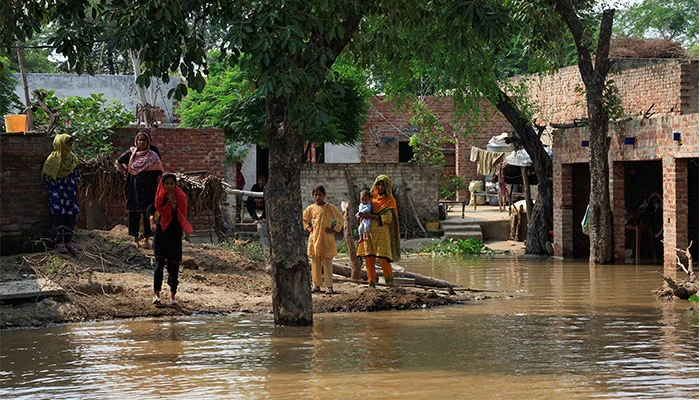
SepNature’s revenge?
By Fariya Hashmat Published in The News on September 29, 2026 In 1970, British chemist James Lovelock proposed an idea about Planet Earth that challenged conventional thinking. He called it the ‘Gaia Hypothesis’, stating that our planet is not just a dead rock with life on it; the Earth is life. It actively regulates itself, much like[…]