Published in The News on October 30, 2021
KARACHI: The State Bank of Pakistan (SBP) is optimistic about the prospects for the country’s economic growth, expecting the economy to grow around 5 percent this fiscal year.
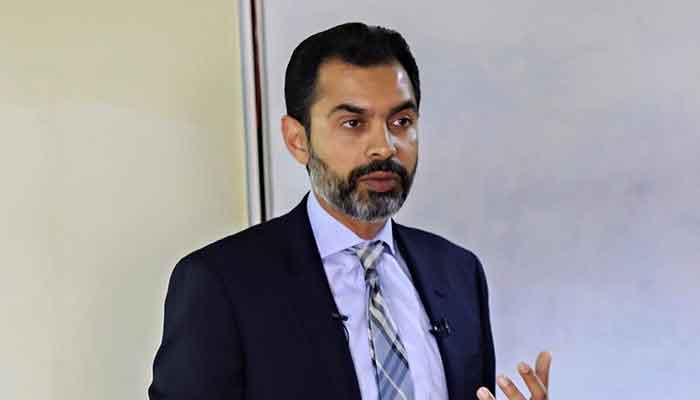
“The economy grew about 4 percent in the last fiscal year and we expect it to grow close to 5 percent in the current fiscal year, that is a welcome challenge for us,” SBP Governor Dr Reza Baqir said at the Pakistan Banking Awards 2021.
He said the SBP is working with the government, banks, and other stakeholders to ensure that it is a sustainable phase of growth. The SBP in partnership with the government is taking measures to support economic growth without compromising the sustainability of the external sector, he added. He said that the government and the International Monetary Fund (IMF) would soon announce the agreement to resume the $6 billion loan programme.
“The Adviser to the Prime Minister on Finance has said clearly that we are very soon about to announce the agreement with the IMF for the next review,” Baqir said. “The determination expressed by the Government of Pakistan that we see the journey ahead in partnership with the IMF… it is also the fact that we have confidence in the direction on our policies,” he said.
Recently, Saudi Arabia has announced a support package for Pakistan such as $3 billion deposits with the SBP and to provide a $1.2 billion deferred oil payment facility after Prime Minister Imran Khan visited the kingdom. “These (support from friendly countries) are the measures that over and above the IMF engagement are going to further support our external development,” he said.
The market-based exchange rate system has helped to ensure that the country’s external position remains sustainable. Since its inception, the flexible exchange rate has played its role as a shock absorber, Baqir explained. He said the country’s economy has performed much better than predicted by the IMF last year. The country’s GDP growth, current account deficit, foreign exchange reserves, and external debt all were in a much better position, compared with the IMF projections, he said.
“To back in June 2019 when the IMF started programme with Pakistan it projected our growth would be 3 percent in FY2021 instead the economy of Pakistan grew nearly 4 percent in the fiscal year that closed in June 2021, he said. “For the current account deficit, the IMF projected we have a deficit of 1.7 percent of GDP, but we had a deficit of 0.6 percent. For workers’ remittances, the IMF projected a number of around $23 billion, but we closed the year with $29 billion in remittances.”