By Jawwad Rizvi
Published in The News on May, 06, 2026
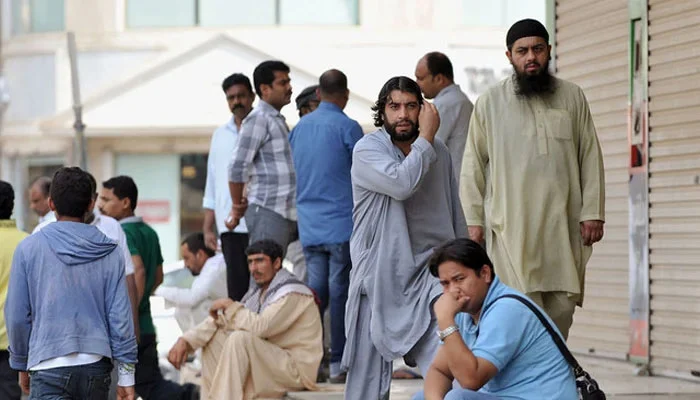
LAHORE: Nearly two-thirds of Pakistani labour migrants continue to fall into low-skilled or unskilled categories, with their combined share rising further in 2025.
The findings come from the Pakistan Migration Report 2025, released by the Lahore School of Economics on Tuesday at its Barki campus. The report provides a comprehensive snapshot of migration trends, remittance flows and emerging policy challenges, while underscoring the growing importance of overseas workers to Pakistan’s economic stability.
According to the report, outward migration from Pakistan has remained volatile in recent years. The number of migrant workers declined from 862,000 in 2023 to 725,672 in 2024, before recovering modestly to 762,499 in 2025. The report attributes this fluctuation largely to tightening visa regimes and shifting labour market policies in host countries, rather than domestic factors.
Migration patterns remain heavily concentrated in the Gulf region, which hosts around 92 per cent of registered Pakistani migrant workers. Saudi Arabia continues to be the leading destination, attracting nearly half of all migrants. Other Gulf countries also remain key employers, particularly for low- and semi-skilled labour.
However, the report notes a gradual but notable trend towards diversification. Increasing numbers of Pakistanis are seeking opportunities in non-Gulf destinations, including the United Kingdom, Canada and Australia, as well as emerging Asian economies.
Remittance inflows from these non-Gulf countries tend to be higher, suggesting the presence of relatively more skilled and better-paid workers. This may also point to underreporting in official migration data, particularly in developed economies.
Remittances, meanwhile, have surged significantly. The report records a 25 per cent increase in inflows, rising from $30.2 billion in 2023-24 to $38.3 billion in 2024-25. These inflows now account for 9.34 per cent of Pakistan’s GDP, underscoring their critical role in supporting household incomes and maintaining macroeconomic stability amid rising imports and stagnant exports.
Experts say the increase is driven by both higher migration levels and a gradual shift towards skilled workers. At the same time, persistent inflation at home has eroded household purchasing power, placing additional pressure on overseas Pakistanis to send more money to support their families.
Despite these gains, the report highlights several structural concerns. Women remain significantly underrepresented in the migrant workforce, accounting for just 1.0 per cent of total migrants. Analysts attribute this gap to socio-cultural barriers, limited access to recruitment channels, and concerns over safety and working conditions abroad.
Irregular migration is another growing challenge. Pakistan continues to rank among the top nationalities attempting illegal entry into Europe. The report notes that 5,680 Pakistanis were apprehended at European borders in 2024, while 3,203 were recorded in the first half of 2025 alone — with nearly 90 per cent attempting entry via risky sea routes.
The rise in irregular migration is closely linked to tightening legal pathways. Stricter visa requirements, higher application costs, and reduced job opportunities in destination countries are pushing some migrants towards dangerous alternatives.
Speaking at the launch event, Mio Sato, chief of mission at the International Organisation for Migration in Pakistan, stressed the importance of promoting safe, orderly and regular migration channels. She emphasised that migration should be a choice, not a necessity, and called for stronger skills development programmes aligned with global labour market demands.
She also highlighted the need to raise awareness about the risks associated with irregular migration and to improve financial inclusion so that remittances can be used more productively at both household and national levels.
Rector of the Lahore School of Economics, Dr Shahid Amjad Chaudhry, described migration as a central pillar of Pakistan’s economic framework, noting the country’s reliance on external income to sustain consumption and ease pressure on the balance of payments.
Without targeted reforms in skills development, migration governance and labour market alignment, experts warn that Pakistan’s migration model will remain exposed to global shocks, even as it continues to underpin the country’s economic resilience.